The Big Here

Wanted to explore the idea of a watershed and how water follows simple rules to create awe inspiring complexity--river deltas, for example.
Wanted to explore the idea of a watershed and how water follows simple rules to create awe inspiring complexity–river deltas, for example.

When I teach literature, I am always impressed by how cut and dried the ‘idea’ of setting was compared to how complex setting plays out in the good ol’ day-to-day.  That’s why I was so glad to see KQED’s quest this week on #CLMOOC  was to help us question and explore the meaning of public space.

When I introduce the idea of setting to my literature students I want them to be very local.  In fact, I wanted them to think of setting in terms of their spaces, their homes, their neighborhoods.  I wanted to get them to become aware of where they lived as if they were characters in their own work of fiction.

In the process of doing this I discovered a marvelous tool for coming to terms with setting and place:  The Big Here.  This is a quiz created…well, let Kevin Kelly tell the story from here:

You live in the big here. Wherever you live, your tiny spot is deeply intertwined within a larger place, imbedded fractal-like into a whole system called a watershed, which is itself integrated with other watersheds into a tightly interdependent biome. (See the world eco-region map ). At the ultimate level, your home is a cell in an organism called a planet. All these levels interconnect. What do you know about the dynamics of this larger system around you? Most of us are ignorant of this matrix. But it is the biggest interactive game there is. Hacking it is both fun and vital.

The following exercise in watershed awareness was hatched 30 years ago by Peter Warshall, naturalist extraordinaire. Variations of this list have appeared over the years with additions by Jim Dodge, Peter Berg, and Stephanie Mills among others.

It is quite glorious how this ties together so many threads in our collective work this summer–systems, games, remediation, identity, and now–public space.  I have come back to this quiz/questionnaire over and over in my own.  Maybe you would like to explore it, too.  I invite you below or you can be terribly informal and just skim the website and lurk a bit there.  It repays deeply and irrevocably.

Here is a Public Commons if you want to share:

View The Big Here Bazaar on Hackpad.

I am hoping to add a Google Survey as well so that folks can gather their responses in a public spreadsheet, a more democratic space I cannot imagine. If somebody beats me to this I would not be unhappy (hint/hint/hint).

Game the Game: Recursion as Systems Thinking for Make Cycle Three

toodudecomixthegameisafoot

In modern literary criticism, stance is all. The beauty of that ‘stance’ is that it encourages us to do what Nick Sousanis calls ‘unflattening’. Sousanis in his unparalleled graphic comic of the same name defines this term thus,

Unflattening is a simultaneous engagement of multiple vantage points from which to engender new ways of seeing.(32)

In other words unflattening is a seeing machine, a way of generating a new way of seeing.

This week we are looking at a new way of seeing in #CLMOOC ‘s third week.  It’s called gaming.  When you unflatten you have to take one view and add another in order to the get the ‘parallax’ so essential to seeing something new. Sousanis devotes a whole chapter to this so I devoutly hope you go buy his book and read more there. Suffice to say, whatever your vantage point you can combine it with ‘gaming’ to reach a greater synthesis.

I have been trying to figure out how our Make Cycle compadres want us to do this.  There were so many calls to action in the newsletter I felt compelled to tease them all out in order to see with this gaming eye.  I am making a game of it.  In fact I am inviting everyone to make a game of it. The Hackpad below has all the particulars which is to say few rules, few boundaries, much openness and an invitation to use the Creative Commons Piratical License (well, not so much a license as a guideline–do what thou wilt.)

I wonder if our facilitators realize that they created a protogame in their own newsletter.  Now that would be a great game:  discover the game within the newsletter about the game.

“Come Watson, come! The game is afoot! Not a word! Into your clothes and come!”

Translation with Another Tongue: Blackout Poems

I saw Xiaogao Neil Zhou‘s Google Plus text and could not resist it.  Like a block of maple it beckoned, shining and smooth, but along its face I could see grains of fracture and shape.  

Here is the source, what he calls his dismemberment, a collection of extremities from other writings.

QQ20150625-1@2x


The vining of English and Chinese drew me into it.  And I thought that since this was a dismemberment that I would carry that forward.  In many ways we are always dismembering, misremembering, unhearing, and otherwise shorting out the wiring and rewiring of language.  So why not.  Forgive me Zhou, but we are each other’s grist.  This is what I did first, a blackout poem

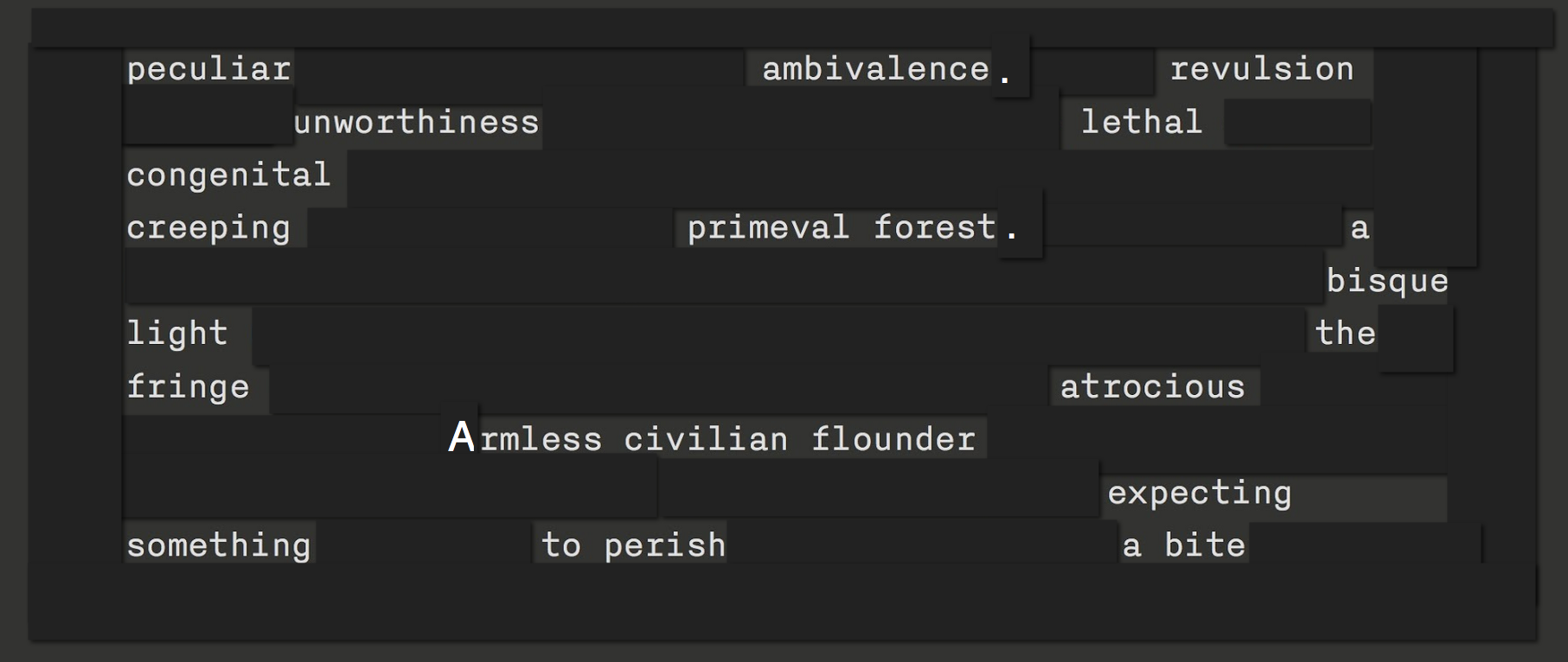
found poem clmooc


Using the desktop program, SnagIt, I blacked out words and phrases that I didn’t want . Sometimes I start with the words I do want.  Whim or unconscious  choice, matters not.  I was left with the image above.  I exported it to Google Drive (very handily done in SnagIt) and once there I opened it up again in Pixlr.

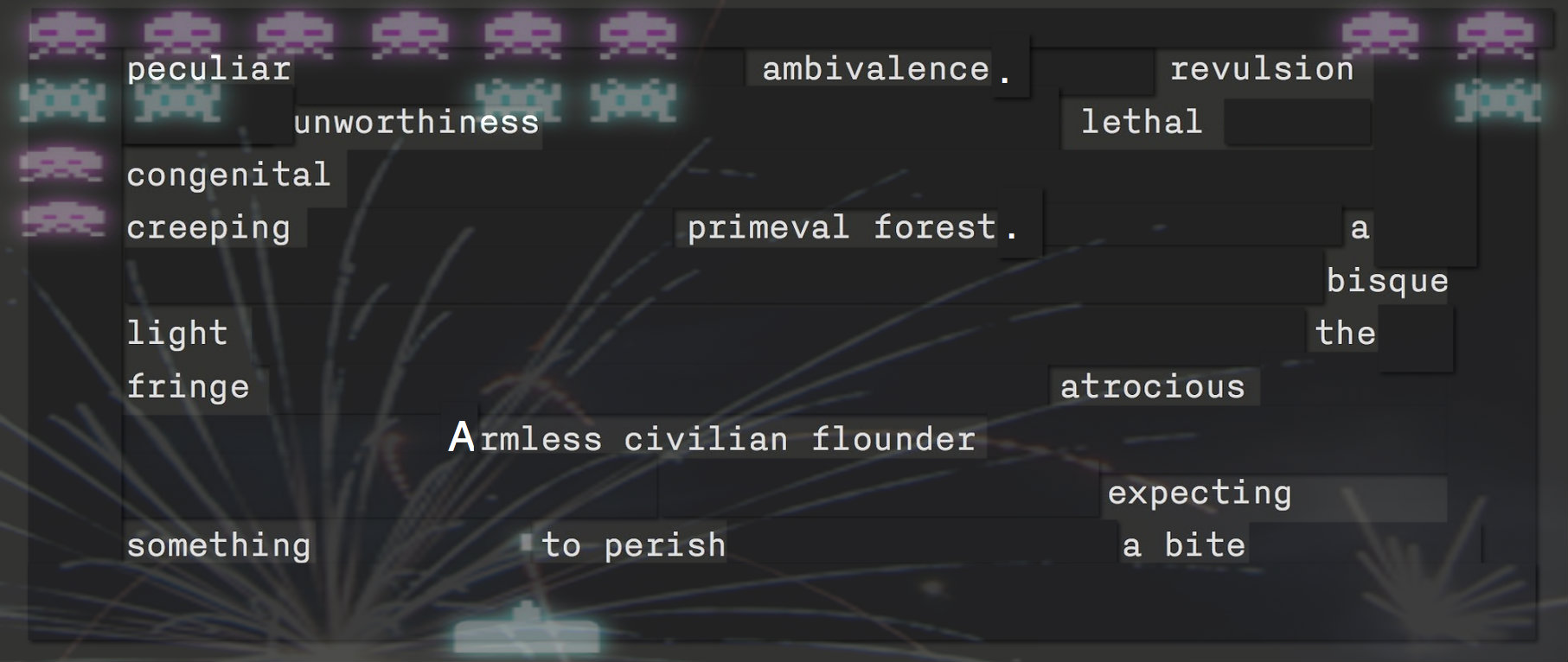
Why?  Because it seemed like it needed rococo of some kind, perhaps a frame and perhaps some fireworks filligree?  Here is the result.

a blackout poem2


Yeah, that’s more like it, blackout poem as Space Invaders.

All that I have described here is a fairly simple matter of layering and delayering, but as a writing instructor I cannot help but think of it as close reading where each delayering is a consideration of author and of creator.  I have to consider and reconsider words, not only what they mean but how they mean.  And the layering?  Much the same consideration.  For example, the idea that instead of blacking out the words I thought that shooting them out old skool was ever so much cooler, evoking a more explosive view of editing. (Lord knows I would have loved to have done more than edit some of the words I have inspired in student essays. Gives me some neat ideas of using a squirt gun and paint a la Jackson Pollack.)

From here it is back to the #CLMOOC Community to beg forbearance from the source and see what folks think about this.

Thanks to Xiaogao Neil Zhou and his untroduction.  Thanks to #CLMOOC for opening this door to the adjacent possible. Thanks to all who read and try to follow my halting post.  Thanks to my future commenters, few but fine they are.  This is my lesson in the power of complexity, oddly variable initial conditions, unintended consequence and all the circumstances that created this particular crossroads.