At the still point of the turning world. Neither flesh nor fleshless;
Neither from nor towards; at the still point, there the dance is,
But neither arrest nor movement. And do not call it fixity,
Where past and future are gathered. Neither movement from nor towards,
Neither ascent nor decline. Except for the point, the still point,
There would be no dance, and there is only dance.
I can only say, there we have been: but I cannot say where.
And I cannot say, how long, for that is to place it in time.
Category: DLMOOC
I Have Seen This Somewhere Before, (No, Wait . Don’t Tell Me.)
I am swamped and I am reading how others are swamped. I am tempted to call this cognitive dissonance, but I don’t think that concept catches or carries the embodiment that is #rhizo14. Instead, I have been trying to process just like Agent J in MIB:

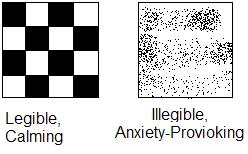
This morning I remembered. I had been in this neighborhood before. How could I have forgotten? What I remembered was an astonishing blog post by one of my favorite web iconoclasts, Venkatesh Rao. I have been dogging his blog, ribbonfarm, for many years. I have been slowing reading and re-reading his book Tempo for almost as long. What I remembered was his take on James C. Scott’s concept of ‘legibility’. Scott argues that the state in order to carry forth its institutional imperatives (taxation, for example) takes complexity either in nature or in society and reduces it to counable and manageable chunks. The picture below speaks volumes more than I could.
 (“A Big Little Idea Called Legibility.” Web. 22 Jan. 2014.)
Rao uses an example from Stephen Johnson to elaborate on the concept:
In Mind Wide Open, Steven Johnson’s entertaining story of his experiences subjecting himself to all sorts of medical scanning technologies, he describes his experience with getting an fMRI scan. Johnson tells the researcher that perhaps they should start by examining his brain’s baseline reaction to meaningless stimuli. He naively suggests a white-noise pattern as the right starter image. The researcher patiently informs him that subjects’ brains tend to go crazy when a white noise (high Shannon entropy) pattern is presented. The brain goes nuts trying to find order in the chaos. Instead, the researcher says, they usually start with something like a black-and-white checkerboard pattern.
Rhizomatic learning invokes the illegible, the complex, and the organic. It is not so much uncomfortable so much as it irreconcileable. Rao sums up, “it is easier to comprehend the whole by walking among the trees, absorbing the gestalt, and becoming a holographic/fractal part of the forest, than by hovering above it.” It isn’t that we can’t see the forest for the trees. It is that we can’t become the forest when we make the trees legible. In this sense many of the current attempts to make learning legible are doomed to complete or nearly complete failure. The messified feelings we get from rhizomatic learning arise not from the process but rather from an attempt to demystify and order/control/guide the process . We say to ourselves (or at least I have said to myself), “How can I use this in my classroom, my professional life, my life?”
We likely can’t in the normal, transactional sense. Rhizomatic learning is a sample of one. And then another. Our attempts to generalize beyond that might be doomed to the same failure that curriculum planners often come to when they textbook-ify a discipline. That is not just an uncomfortable feeling for some. That is terrifying for some. For me it isn’t about letting go, for me it is about letting come. I must let the forest come, let the gestalt arise, let the zeitgeist form. [Insert any words here because mine fail.] As always, I could be wrong.

#Rhizo14: Conformity and Iconoclasm
Dave Cormier’s intro to rhizo14 is full with translation. Or rather it is full with the invitation to translate. By that I mean he gives us room to begin to come to terms with “rhizomatic learning’. Below I begin totranslate a few of his choice remarks.
What happens if we let go of the conventional idea of a course directed from the top down?
I think that there are layers of letting go. There is the primary one Dave describes in the first paragraph–an aware sloughing off of the skin of coursework and curriculum and student and teacher and syllabus–the whole catastrophe. This is very hard unlearning. It requires a continuous monitoring of old metaphors and thinking in the light of …well, you know not what. The secondary letting go is individual baggage schema we each prize. We call it experience. It is an even greater unlearning. It is the matter of taking to heart Coleridge’s “willing suspension of disbelief” in ways that most of us are unwilling to risk. We say we can do it, but such work is perceived as dangerous. It requires a vulnerability to and presence of the immediate, unmediated now. That is some scary shit, compadre, I don’t mind saying.
Trust the idea that people can come together to learn given the availability of an abundance of perspective, of information and of connection?
We are quite capable of doing this. We just have to remember what it was like to be an infant learning once more. Yeah, just open up a vein while you’re at it. I will try, but how do I try to do this? (No Yoda quotes in response, please.) First, I have to accept as given that everyone has best intentions at heart. That means that I have to have the very best intentions myself. Not perfect, but the best that I can muster. Second, I have to bring immediate and vulnerable stuff to the table. That means no bullshit to the best of my ability. Or even better, I will be honest. For example, I am trying to be straightforward about my worries here and about what I expect of myself and what I expect of others. And I have to acknowledge that I might be wrong, yes, totally wrong about all or part of what I have already written.
Being resident in a particular field?
As a farmer, I am comfortable with the idea of working in a field. I acknowledge that there are pre-existent, but not largely predetermined paths. I understand that there is mystery here
and ‘unknown unknowns’ that can play out like Taleb’s black swans–complex, unbidden and unpredictable. As a farmer, I know that I am always working behind the arc of the future, a future that is as often as not curling and ready to collapse in gnarly waves crushing or carrying me forward into the present and then the past.

The class is made up of the collected paths chosen by all the students, shaped by my influence as an instructor and the impact of those external nodes they manage to contact. Respond.
I am simultaneously the best conformist and worst iconoclast I know of. I have had plenty of practice at doing what I am told. Plenty. At the same time I have found it quite impossible to do so. For example, my wife and I homebirthed all of our children in a time and place where finding midwives was a challenge. There were no certified nurse midwives where we lived. In fact, even getting a physician to help with pre-natal care was problematic. We eventually found exceptional help on the margins. Our midwife had gotten her training and experience working in Texas with very poor folks exactly like us. Our midwife’s assistant opened up a world of knowledge that we didn’t know existed. Our firstborn had some interesting complications including a cord wrapped around the neck. My point is simple–I suspect we only became iconoclasts because
the issue is so personal and important, so important that we could not leave the work entirely to experts. Just like we could not leave our kids’ learning to the not so tender ministrations of schools, public or private, so we homeschooled. Just like we couldn’t leave our food and water and housing entirely to others. I am hoping to meet iconoclasts and conformists alike to help me meet this term with open hands.

Course starts January 14th
I must get past my personal iconoclasm to get to the community. This will be hard for me. I have some experience last summer working with some fabulous folks from the National Writing Project. They took me on and I learned how to
connect better. That community-centeredness is not foreign to me, but it has not always been the way I have gotten along best in the world. I love helping every Tom, Jane, and Harry, but I really don’t like institutional groups all that much. I shy away from Rotarians and churches alike. Rhizo14 will be part of my continuing effort to get out of my comfort zone. I will need all the help I can get.
[If you want to know more about iconoclasm in coding, check out Ted Neward’s Info Q keynote.]
