Connecting with Melville: Mashup Melville or Moby Dick Meets the Restless Digital Natives

 Is this the summer to finally do justice to Melville’s opus mundi, Moby Dick?  I think I will have another go at it, but this time I am going to get some help from Henry Jenkins and Erin Reilly.  They have written a participatory learning guide to the work that I trust will be my mentor for a slow and close encounter with whaling and the deep heart’s core. Their model is called “participatory learning” and is based upon Jenkins’ 2006 whitepaper where he defines the term

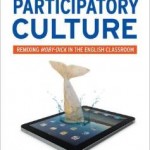
Jenkins and Co. have created a mentor book to look at as you proceed autodidactically through the summer:  Reading in a Participatory Culture: Remixing Moby-Dick in the English Classroom.
And they have a freebie, an interactive book/website called Flows of Reading that fits along with the book above.

Literary scholar Wyn Kelley, Theater director/playwrite Ricardo Pitts-Wiley, actor Rudy Cabrera, and myself, writing as a fan and media scholar, each describe our complex and evolving relations with Moby-Dick, and encourage teachers and students to reflect more about their own experiences as readers. We use the idea of remix as a central concept running through the book, exploring how Pitts-Wiley remixed Moby-Dick, how Herman Melville remixed many elements of 19th century whaling culture, how other artists have remixed Melville’s work through the years, and what it might mean for students and fans to engage creatively rather than simply critically with literary and media texts.

You can also share my highlights of Jenkins/Kelley’s book on Kindle here.

Screen-shot-2013-03-08-at-11.26.36-AM-620x336


Vellum and Twijector: Twitter Tools for Today

vellum


I am in tool harvesting mode now that the semester is over.  Pleasant job indeed.  Here are two I am beginning to use: Vellum and Twijector.

Twijector is in a long tradition of tweet projecting tools: Tweetbeam, TweetWallPro, VisibleTweets  (cool factor of falling letters kinetic typography), Twubs,   et al.  the problem is that most of them cost bucks.  That is why I like Twijector–free.  And it is simple, just the tweets folks in full screen mode if you want.  Personally, I have been keeping it up in my browser to give me a real-time spot to check what is happening on the hashtag.  I could do this with Tweetdeck or some other hashtag client (Twubs works pretty well for that), but I just like it’s simplicity.  Of course, I could wish for it to be embeddable, but …

Here is the Twijector feed for #clmooc (which btw you should sign up for post haste  because we are going to have a blast this summer.)

The other tools/website I wanted to mention was the NYTimes’ Lab tool, Vellum. Here is the Times’ skinny on it.  They call it a “reading layer”–I like to think of it as a links filter on your Twitter feed, an interesting new species of curation.

Here’s how Alexis Lloyd put it:

One of my primary uses for Twitter is to find interesting reading material: breaking news, long reads, research relevant to my work, or funny things about maps. However, Twitter’s interface treats commentary as primary and content as secondary, which can make it difficult to discover things to read if I’m mostly interested in that secondary content.

To address this use case, we created Vellum. Vellum acts as a reading list  for your Twitter feed, finding all the links that are being shared by those you follow on Twitter and displaying them each with their full titles and descriptions. This flips the Twitter model, treating the links as primary and the commentary as secondary (you can still see all the tweets about each link, but they are less prominent). Vellum puts a spotlight on content, making it easy to find what you should read next.

Once you authorize the NYTimes to use your twitter feed, they strip away all but the links and some title matter and usually some of the original twitter commentary.  I find that I use it along with my other workpaths (inoreader rss aggregator, gmail, WordPress Reader, G+) to start my day.

Two aspects of Vellum I like:

1. I love the focus it gives me. I can just read the content if I want.    

2. I love how I can see whether or not my twitter feed is varied or not. I like it varied with some professional emphasis and this gives me a quick check on that.  Wouldn’t want to be trapped in a Twitter echochamber now would I?  

For example in the screenshot below, I have the Onion and MIT Tech review and Politico and turtles. A fine pastiche. I am full on use mode and thought you might like to try it too.


2014-05-23_0902

Make/Assignment Banks/Repositories/Galleries with Alan Levine


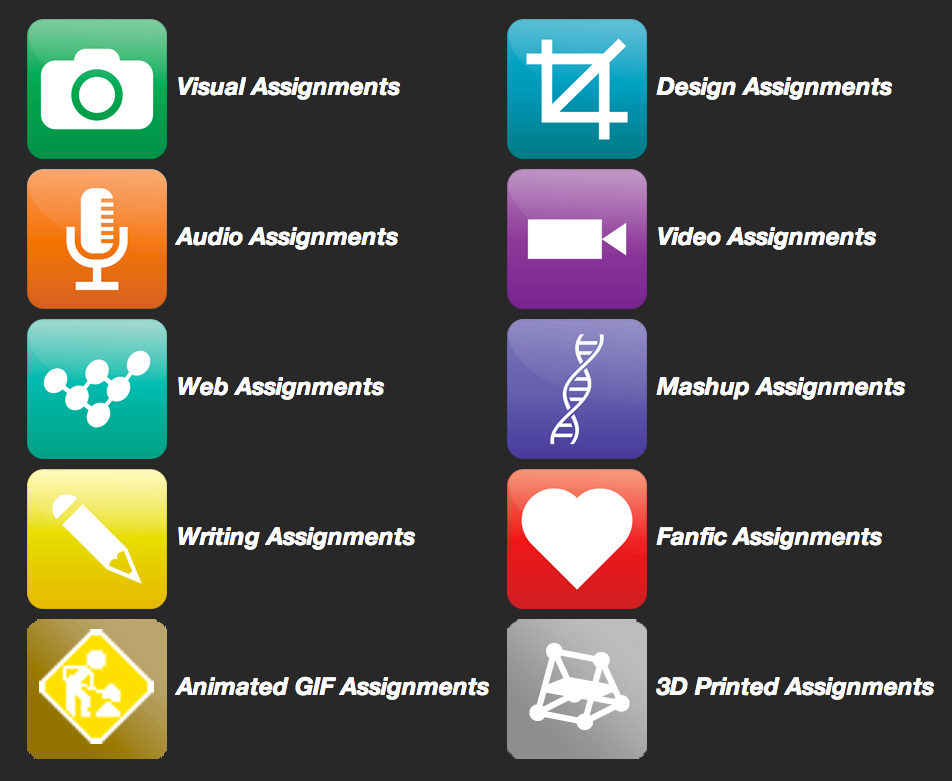
ds106assignmentbank

Tonight Paul Allison’t TeachersTeachingTeachers Hangout will feature a discussion of Make/Assignment Banks.

Wednesday, May 21 on Teachers Teaching Teachers — 6PM Pacific/9PM Eastern — we will be talking about Make/Assignment Banks/repositories/Galleries with  +Alan Levine leader and teacher of the open digital storytelling class, ds106 http://ds106.us/. 

Paul has some interesting observations on his blog and some even more interesting questions:

    • What are and the connections between missions/assignments/makes to #clmooc other collaborative MOOCS or MOOCS in general?
    • How do we guide students and teachers to use and contribute to these repositories? How is it different for different ages?
    • Each are attached to important learning communities/ecologies. What happens when we use them outside of these experiences?
    • What’s the difference between a make and an assignment?

I have prepared a Diigo Group with links that echo some of Paul’s own.  You can access these links here:  

See you tonight at http://edtechtalk.com/ttt at 9PM ET/6PM PT on Wednesday, May 21.