
I saw Xiaogao Neil Zhou‘s Google Plus text and could not resist it. Like a block of maple it beckoned, shining and smooth, but along its face I could see grains of fracture and shape.
Here is the source, what he calls his dismemberment, a collection of extremities from other writings.

The vining of English and Chinese drew me into it. And I thought that since this was a dismemberment that I would carry that forward. In many ways we are always dismembering, misremembering, unhearing, and otherwise shorting out the wiring and rewiring of language. So why not. Forgive me Zhou, but we are each other’s grist. This is what I did first, a blackout poem
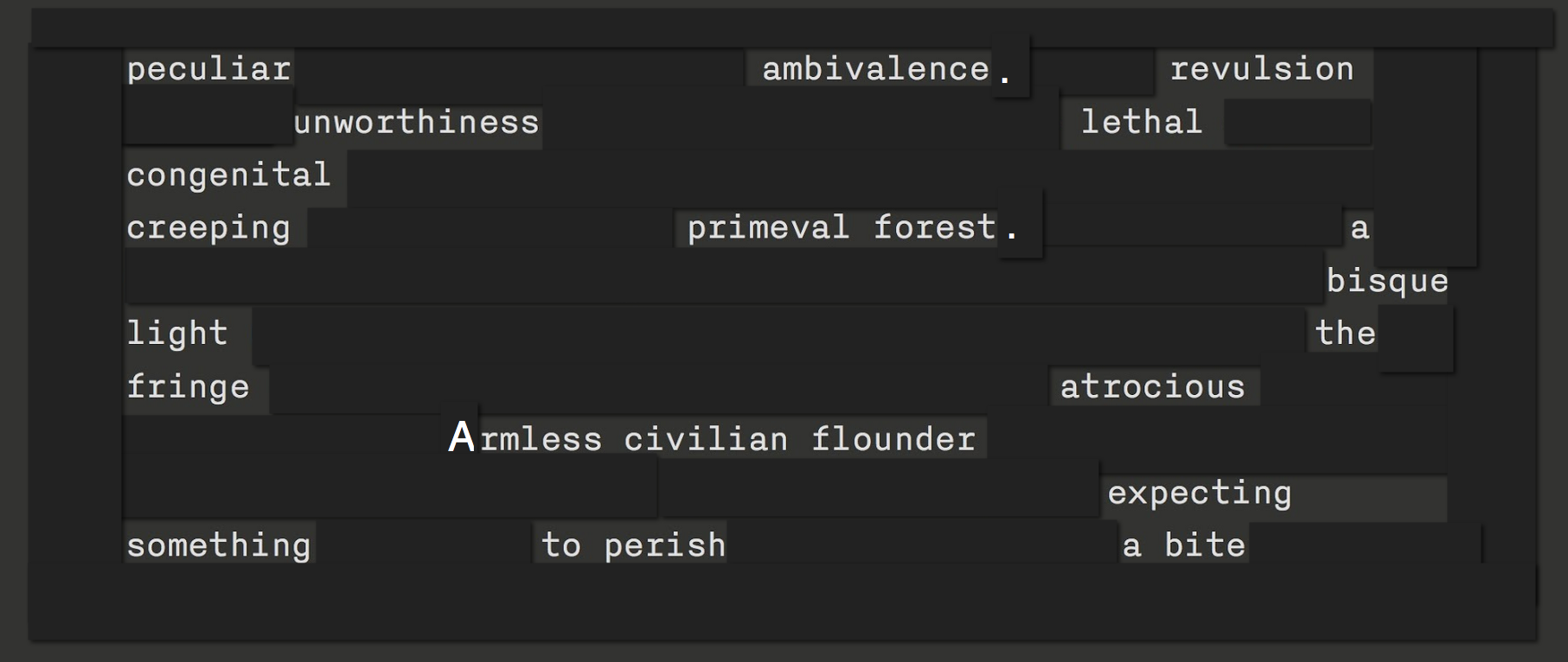
Using the desktop program, SnagIt, I blacked out words and phrases that I didn’t want . Sometimes I start with the words I do want. Whim or unconscious choice, matters not. I was left with the image above. I exported it to Google Drive (very handily done in SnagIt) and once there I opened it up again in Pixlr.
Why? Because it seemed like it needed rococo of some kind, perhaps a frame and perhaps some fireworks filligree? Here is the result.
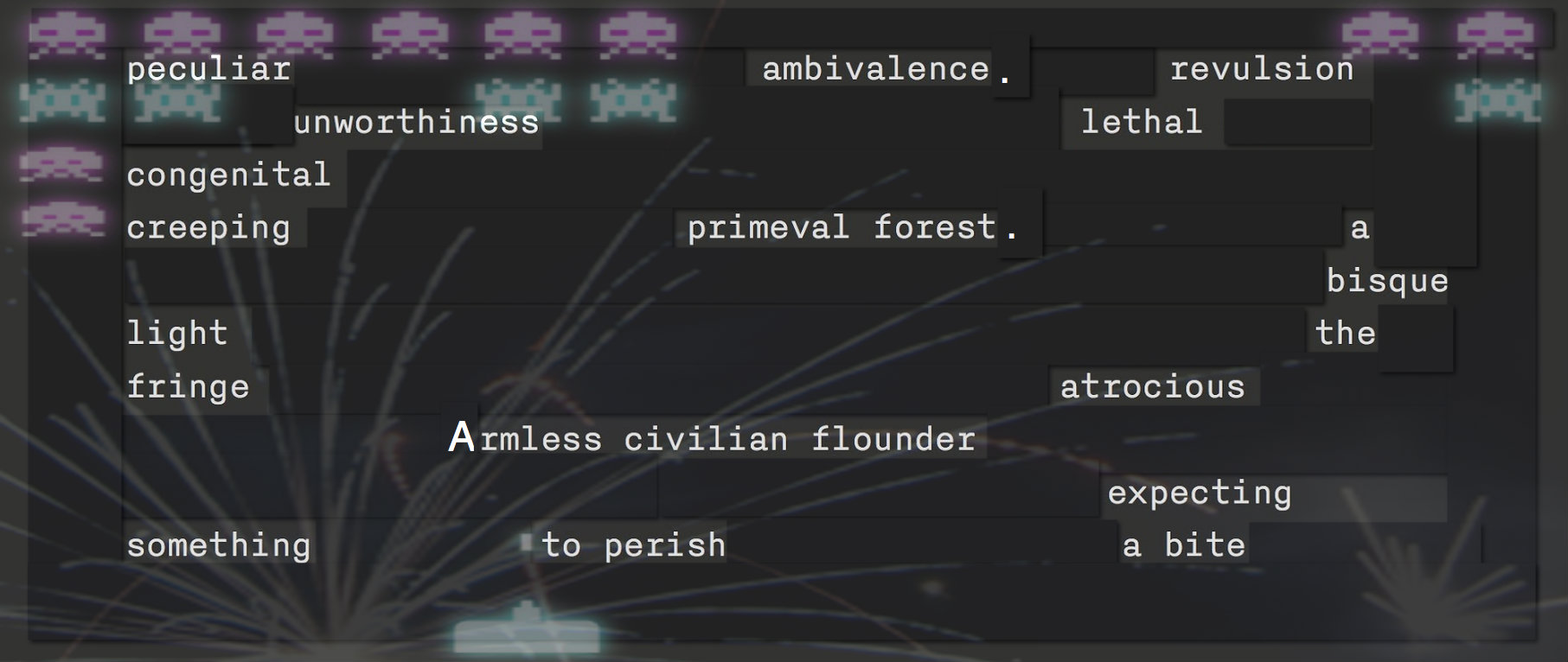
Yeah, that’s more like it, blackout poem as Space Invaders.
All that I have described here is a fairly simple matter of layering and delayering, but as a writing instructor I cannot help but think of it as close reading where each delayering is a consideration of author and of creator. I have to consider and reconsider words, not only what they mean but how they mean. And the layering? Much the same consideration. For example, the idea that instead of blacking out the words I thought that shooting them out old skool was ever so much cooler, evoking a more explosive view of editing. (Lord knows I would have loved to have done more than edit some of the words I have inspired in student essays. Gives me some neat ideas of using a squirt gun and paint a la Jackson Pollack.)
From here it is back to the #CLMOOC Community to beg forbearance from the source and see what folks think about this.
Thanks to Xiaogao Neil Zhou and his untroduction. Thanks to #CLMOOC for opening this door to the adjacent possible. Thanks to all who read and try to follow my halting post. Thanks to my future commenters, few but fine they are. This is my lesson in the power of complexity, oddly variable initial conditions, unintended consequence and all the circumstances that created this particular crossroads.
Permalink //
You always always remind how important it is to close read, savor, appreciate. Thank you for showing your process so others can follow without having to figure out the “how.”