
All week I have tried to apply rhizomatic ideas (or my version of them) in my university classroom. The results feel sort of right. I think of this not only as a week of uncertainty in #rhizo14 but also as a time to apply these principles in the classroom.
1. Used principle of ‘enforced independence’ in first day of classes with summary assignment. I assigned students the task of writing a one page summary of Steven Johnson’s NYT Magazine article, “Watching TV Makes You Smarter”. I did not give any further instruction–summarize in one page. Part of me wanted to use this as a diagnostic tool to figure out what my students’ default summaries might look like. Several strategic students emailed me during the week to ask for further guidance. I explained my ideas of enforced independence to them. Silence.
2. Used cheating as a point of discussion in the name game. I play lots of different name games in the first two weeks of class. The traditional one has you say your name to the entire class. The next in line says their name and your name. And then all the way around. The last person has to say all the names. That would be me. I have lots of international students (Saudis in particular) who have lots of problems with this. They write down the names so they can remember when it comes to their turn. When someone started reading from their list I stopped the presses and asked everyone if it was OK to game the name game in this way. Lots of interesting discussion about the rules and their intent and whether there should be fudge factors for those who speak English as a second language. One student explained to everyone that she had had a traumatic brain injury caused in a horse fall. She said that taking notes was a crucial short term memory aid. I am pretty sure that I would not have had this revealing discussion without Dave’s provocation the first week of #rhizo14.
3. I created a G+ communities as a way to encourage and enforce independence, just enough rope to trip over (I do hate the other image of enough rope to hang oneself). I have what I am hoping will be self-sustaining Google Plus communities for my two online ‘Intro to Lit’ classes, my two advanced comp classes and my professional writing internship class. I have a lot of faith in the wisdom of crowds.
I try to make these communities useful for the students. I am pushing every day at the beginning of my face-to-face classes for students to use the space just as I use it–for their own purposes as a learner in the classroom. If that means off-topic, then so be it. We shall see, but already some learners are sharing their interests. I am hoping that I can provide a mix of cool tools, modeling behavior, provocation, and ornery cussedness to the community. I am pushing them to reciprocate. Hmmm…enforced reciprocation?
4. In my F2F classes I gave each student a 3X5 card. On one side I instructed them to outline their expectation(s) for that day. On the other side I asked for their expectations for the course for the semester. I wanted to know whether the idea of personal learning expectations could be crowdsourced. Can they be sketched out? Here is a link to the list of their short term and long term expectations that I collated from those 3X5 cards. I showed this to them and it led to a discussion of the ideas of dependence, independence, and interdependence as well as Dave’s idea that “the community is the curriculum”. Below is a screenshot that I placed on their G+ Community.

I am playing with the idea of ‘transplanting’ as enforced independence. How many of these ideas transplant well? Perhaps the parable of the mustard seed is a lesson in rhizomatic learning. Redundancy and fecundity are corollaries to rhizomatic learning? And I am just following the metaphor as it extends into the classroom.
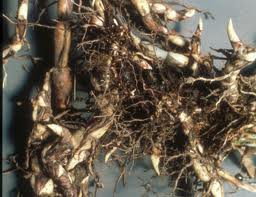
4. My professional writing collaboration is a group of English majors (professional writing, creative writing, comp and rhetoric, secondary language arts teachers) who are working on a collaborative blog, the English Majors’ Weblog. This is to my mind the test of Dave’s idea that the community is the curriculum. In our case we do have a charge from our department head to do some vague stuff, but it is up to us to decide what that might be. Our community of six is in charge of where the rhizome will wander. I hope it is as invasive as Johnson Grass and as useful as bamboo.
I agreed with one of my commenters (sorry, I can’t find it right now, I will look) that even the most benevolent classrooms are still enforcement-fed, but I think that in those classrooms there is a profound distinction between an invitation and a permission. Permission is action within bounds. It is a closed game. Invitation is action without bound. For me the infinite game that is afoot is one that originates within the one who is invited. Enforced independence can be a hateful double bind. It is up to us to find a way to reconcile that paradox. This week was my first ‘go’ at that knot.

Permalink //
I have to know -what is this scarf that you might have made yourself?
Permalink //
Here ’tis: http://www.flickr.com/photos/tellio/12250763735/
Permalink //
Very nice 🙂
Permalink //
Loved this post, Terry. Loving ppl sharing practical classroom tips – the brain injury story a great one there. Will tell it to my students as a way of showing how some rules or structure cause inequalities we may not be aware of or could predict.
Something u said about “transplant” resonated with me a lot… Was about to post sthg about it on fb… How great teaching is more intuitive usually and personal, difficult to articulate and transfer across ppl and contexts (transplant to use ur term)
Also loved the image of earphone! I am still dying to know how it does that! Also an image worth sharing in class
Inspiring as usual… Thanks!
Permalink //
I am fascinated by tangles, have been ever since I found out as a boy that I actually delighted in ravelling fishing line Gordian knots. Here is a link to some hard science about it that one of my students this semester pointed me toward: http://www.pnas.org/content/104/42/16432.full And here is the tl;dr version: http://www.omg-facts.com/Science/There-Is-A-Scientific-Study-On-Why-Your/47008
If there is anything that is rhizomatic, it is tangling. May you be blessed with the patience to view it all as an infinite game.
Permalink //
Thanks for sharing your experimenting. It’s great to see the willingness to embrace uncertainty with a clear plan for it.