
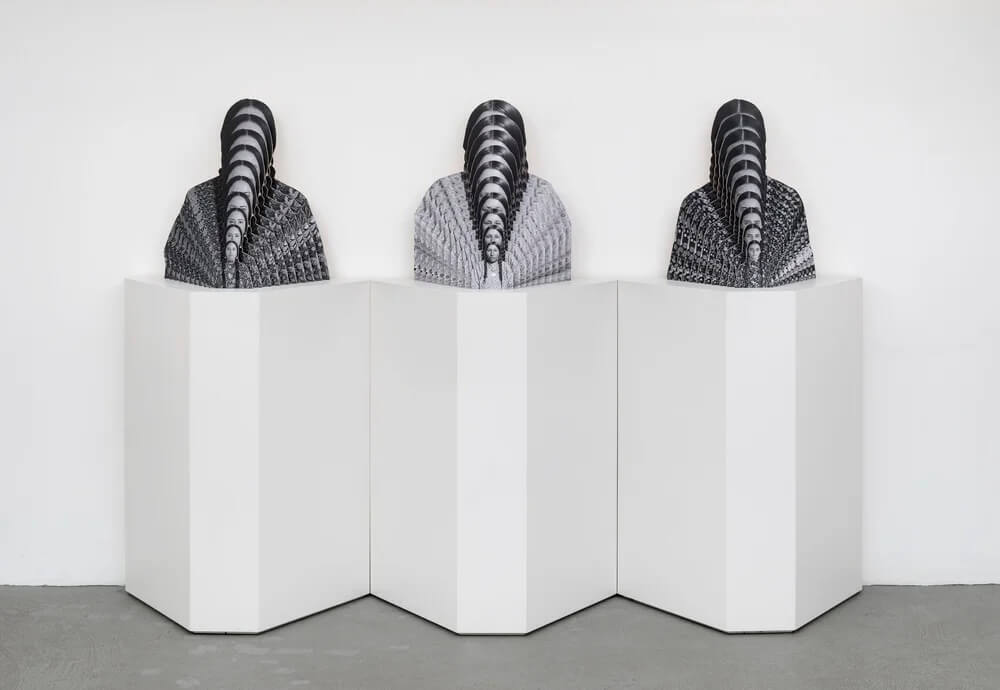
A marvelous interview with Crow artist Wendy Red Star. You might think of it as a mini-course in creativity with Wendy as the case study.
Here are some interesting quotes from the text:
– “Authenticity Can Be Found in the Artificial.”
– “Starting out being a poor grad student, I had to think of how I could do something big with the budget that I had.”
– “Constraints and Scarcity Are Powerful Catalysts.”
– “You should always bet on yourself. It always turns out well, making that investment.”
– “The Real Work Often Happens Outside the Studio.”
– “The most important part of the process might not be visible to an outside observer.”
– “True Creative Maturity Is Collaborative.”
– “As I’ve moved into a more mature practice, the thing that’s been really pleasurable is how collaborative it is… It’s just been so much more fantastic than I could ever imagine.”
– “Research Is a Conversation with Your Ancestors.”
And here are some ideas for writing:
1. **Astroturf Dreams: The Authenticity of the Artificial**
– Explore the juxtaposition of real and artificial in art, drawing parallels to Wendy Red Star’s use of dioramas.2. **The Elk Tooth Dress: Symbols of Adaptation**
– A poem reflecting on cultural resourcefulness and the symbolism of imitation teeth, exploring the deeper meanings of authenticity.3. **Constraints as Catalyst: The Gift of Scarcity**
– Delve into how limitations can fuel creativity, inspired by Red Star’s experiences as a single mother and artist.4. **Between 7 P.M. and 1 A.M.: A Time for Creation**
– Capture the nocturnal world of an artist who finds time in the quiet hours, turning scarcity into productivity.5. **The Invisible Studio: Where Ideas Bloom**
– A meditation on the unseen labor of creativity, where research and conceptualization lay the groundwork for art.6. **Collaborative Canvas: The Maturity of Shared Vision**
– Celebrate the evolution from solitary creation to the joy of collaboration, inspired by Red Star’s artistic journey.7. **Ancestral Whispers: Research as Dialogue**
– Explore the concept of research as a conversation with ancestors, where intuition guides the discovery of hidden stories.8. **Chief Plenty Coups in Washington: A Journey of Influence**
– Narrate the historical travels of Chief Plenty Coups, weaving together cultural exchange and personal transformation.9. **The Mount Vernon Connection: A Cross-Cultural Landscape**
– Examine the blend of cultural landscapes, inspired by Chief Plenty Coups’ admiration for George Washington’s estate.10. **Redefining Creativity: A Path Uniquely Yours**
– A reflective piece on letting go of romanticized myths to embrace a more grounded and personal artistic path.11. **Betting on Yourself: The Leap into the Unknown**
– Inspire readers with the courage to take risks, drawing from Red Star’s decision to pursue full-time artistry.12. **An Archive of Stories: The Living Past**
– A poem that brings to life the stories waiting within archives, where each document holds ancestral echoes.13. **The Solitary Genius Myth: Breaking the Illusion**
– Challenge the myth of the isolated artist, highlighting the interconnectedness of creativity and community.14. **From Hollywood Props to Cultural Statements**
– Explore the transformation of ordinary objects into meaningful art, inspired by Red Star’s innovative sourcing.15. **The Creative Window: Fear as a Motivator**
– Capture the moment of embracing fear as a driver for creativity, highlighting the transformative power of uncertainty.
And a super simple summing up:
**What I Learned from Artist Wendy Red Star About Making Art**
People often think artists work alone in messy rooms, waiting for magical ideas. But Wendy Red Star, a famous artist, shows us that this isn’t true. Her art teaches us five important things about being creative:
1. **Fake Things Can Be Real in Art**
Wendy made art with fake grass and toy animals because she didn’t have much money. She wanted to show how things are made today. Her art is like a special dress from her tribe that used fake teeth when real ones were hard to find. So, using pretend stuff can still be important and real.2. **Limits Help You Create**
People think artists need lots of time and freedom, but Wendy found that having less time made her work harder and better. She was a mom with a job, so she made art at night. Later, she lost her job but decided to try being a full-time artist. It was scary, but she worked hard and succeeded.3. **Thinking is Part of Making Art**
Wendy doesn’t just make art in her studio. She spends a lot of time thinking and researching on her computer. This helps her come up with great ideas before she starts creating. Thinking is an important part of making art, even if you can’t see it.4. **Working with Others is Important**
At first, Wendy worked by herself. But she learned that working with other people makes her art even better. She now enjoys working with different people to create new things, and she wishes young artists knew that it’s okay to get help.5. **Learning from the Past**
Wendy learns about her ancestors by looking at old things in museums. She uses these stories in her art, like when she found out about a chief from her tribe who liked a famous house and made his home look like it. Wendy’s research is like talking to her ancestors.**Conclusion: Finding Your Own Way**
Wendy Red Star shows us that making art isn’t just about being alone and waiting for ideas. It’s about using what you have, thinking a lot, working with others, and learning from the past. She teaches us to find our own special way of being creative. So, what ideas about making art do you need to forget to follow your dreams?Created with theoasis.com
And a video take on the above:
Permalink //
Fake Things Can Be Real in Art — something about this fascinates me …
Kevin