Google Apps For Education Now Has More Than 50 Million Users

Google Apps For Education Now Has More Than 50 Million Users –

by Cinthya Mohr, User Experience Lead, Google for Education In a junior high class in Queens, New York, Ross Berman is teaching fractions. He wants to know whether his students are getting the key concept, so he posts a question in Google Classroom and instantly reviews their answers.


I am beginning to get a feel for the ‘tsunami strategy’ that Google envisions for Google Classroom.

K-12 Google Classroom—>University Google Classroom—>Life Google Classroom

Once one has invested in the Google ecosystem it becomes too sticky to leave, a honey trap of free tools and services so useful that leaving is inconceivable.  Once a school is vested in Google Classrooms it is like Blackboard has become at my university only cheap/free. Blackboard is tied into our authentication system (Banner), it has its own servers (and server admins), and has a yearly licensing fee. I think it conservatively costs our university about $300K a year to run.

Why aren’t we using Google Classroom?  Because Blackboard has that same kind of sticky use factor.  Faculty, administration, students all have their tongues frozen to that flagpole.  Better the devil we know than the cheaper, proprietary, profit-based devil we don’t.

Proves the point that just as in the financial world, there are learning management systems too big to fail.  And that cartel practice seems to be what all of the players aspire to be.

I don’t trust any of them.  Cheap (aka the Goog) carries with it the risk of abandonment. Google has done it before.  Expensive and proprietary carries with it the same risk, but perhaps in a different direction:  increasing costs brought on by monopoly practice or Google sees the way to buy out a majority share in the online learning market by acquiring and shuttering Blackboard.

Google might be able to accomplish all of this just by doing what it is already doing with its 50 million teachers and learners–creating a ‘tidal wave of inevitable’ that universities with shrinking enrollments and budgets must accede to.  Other learning management systems will simply be sacrificed on the altar of expedience.  Besides, Google has told us its corporate mission is to do no evil.  Right? I triple dog dare you to say otherwise.


YouTube player

Candy Blox Versus Pallet Liquidators

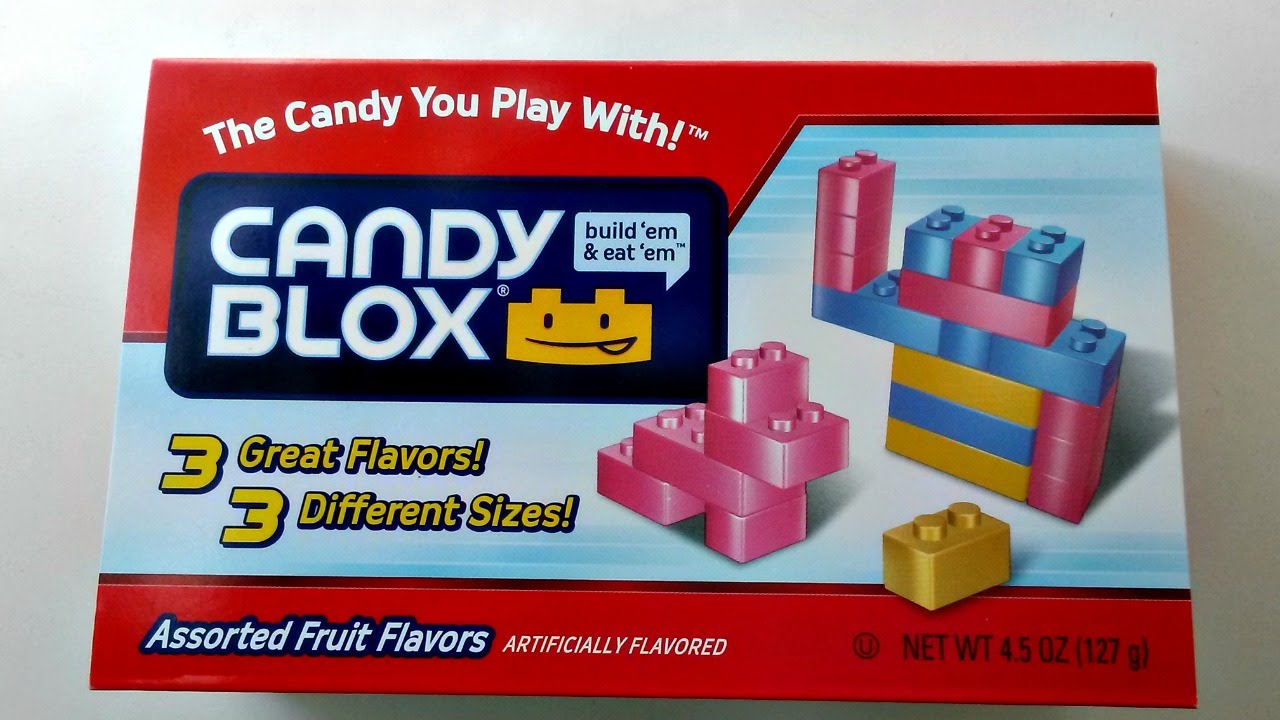
I was waiting in line at the Sav-A-Lot yesterday to purchase some bananas and milk. In the ‘impulse’ section next to $1 pregnancy tests was CandyBlox. Charming. Candy you can play with then eat. $2.50 a box. The frugal dude in me said, “Not a good deal. Don’t even think about it,” while part of me screamed like a six year old boy, “Please, please, please!” My frugal self won. The little guy will win another day. Still…such a concept.

Walking out to the car with my groceries, I noted a new store had opened where the Family Dollar had been. There is a continual churn of these stores which consist entirely of the contents of container ships from China and points east. There are no small clothing, hardware, or appliance stores in small town Kentucky anymore. Only these outposts for slave labor goods from around the world. Only this one was obviously an outlier in that group. They called themselves “The Pallet Liquidator Store”. I walked over to view dozens of tall, pallet-sized cardboard boxes filled with the leftover stuff from the contents of container ships from China and points east.

The phenomenon of salvage groceries has become entrenched since the Amish moved into our community over twenty years ago and started them locally. It is a national trend now. This is the natural extension from groceries to big box store leftovers. Commerce has devolved to the point where rural communities are the very tail end of the cloaca of 21st century consumer culture. Below you will find a twisted pair of videos that bespeak this low truth. Useless stuff re-packaged, but still useless. Similar to the Japanese idea of chindogu.

Feel free. Is this what crazy Yeats meant when he ended his apocalyptic poem “The Second Coming” with a question:

And what rough beast, its hour come round at last,
Slouches towards Bethlehem to be born?

Sometimes the best view of the apocalypse ain’t in some future urban blightscape. No, it is right where the beast hunkers down for the long haul in some small town strip in Kentucky with the nail salons, the tattoo joints, the adult GED centers and the great Sargasso Sea of plastic that is the pallet liquidation biz.

YouTube player


VS.


YouTube player

How to respond to learning-style believers

How to respond to learning-style believers

“What do you mean, I shouldn’t accommodate people’s learning styles? You can’t tell me people don’t learn differently! I see it in the classroom all the time!” Maybe you’ve heard that from a classroom presenter (I have). Or maybe you’ve heard this from a client: “Be sure to include narration for the audio learners!

Debunking as a community service. Why has educational research been such a slough of despond over what appeared at first to be solid ground? Anyone who has ever taught can sing a litany of reform ideas that have ended up on the heap. What I am fascinated by is how long debunked ideas keep on living, zombies by other name. These walking dead include Dale’s Cone, right/left hemisphere, mindsets, and my personal fav–learning styles (although “grit” is charging hard along the rail as my new bete noire).

It’s not that any of these ideas are wholly wrong, it’s that teachers have come to accept them without reflection as wholly right. Are teachers just true believers who not only want but need to have certitude? As one famous jurisprudent said, “Certitude is not the test of certainty. We have been cocksure of many things that were not so.” So what is going on?

This article is certainly worth a read not only for its specific critique of learning styles, but also for pointing us to sites like SkepticalScience with their free Debunking Handbook (http://www.skepticalscience.com/Debunking-Handbook-now-freely-available-download.html) and the DebunkerClub (http://www.debunker.club/learning-styles-are-not-an-effective-guide-for-learning-design.html). Besides that, the tone is very gentle and understanding. Debunking can be painful all around.

And that is the best part of the article–its moral sensitivity to those who want to set the record straight without making believers hate their guts. I classify this under the category of “course-in-a-blog-post”. Much to view, many hyperlinks of value, and much to return to. Brava.