I have been trying to use Pablo’s new mobile tool Remix. I created this workflow to make it happen. Are Pablo and Remix really all that different?? No, but it is really tough to get anything more than barebones info onto the mobile app from the desktop without first creating some text first. I wanted to highlight some text on the page in my desktop browser and go straight to Remix, but this is what you get when you do that.
There isn’t even a link to follow! That sucks. Maybe I am doing something wrong?
Whatever the case this is how I grabbed some text from an article by Nicholas Carr’s blog article in Rough Type. The Loom screencast below contextualizes my choice. I think out loud about why I wanted to highlight this particular passage.
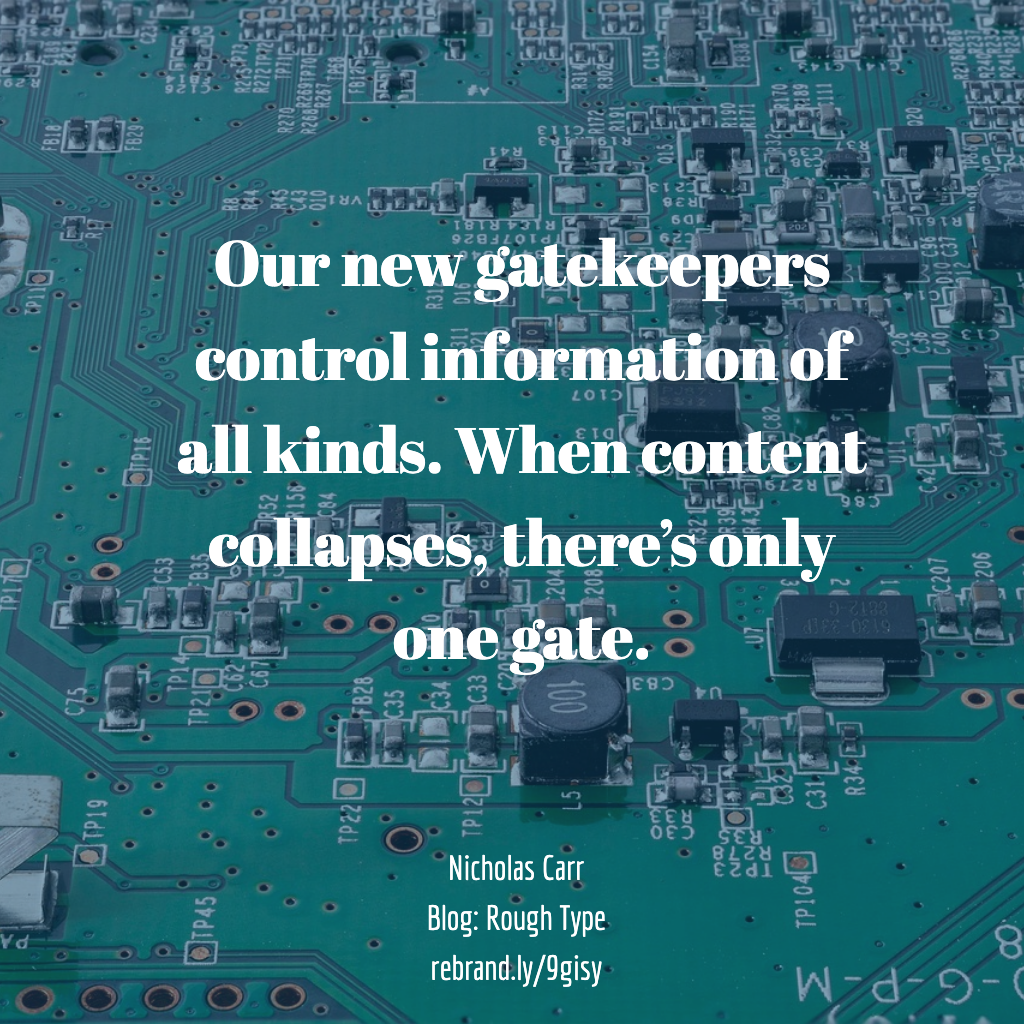
Once I decided on what text I wanted to highlight, I created a Pablo image that you can see below.
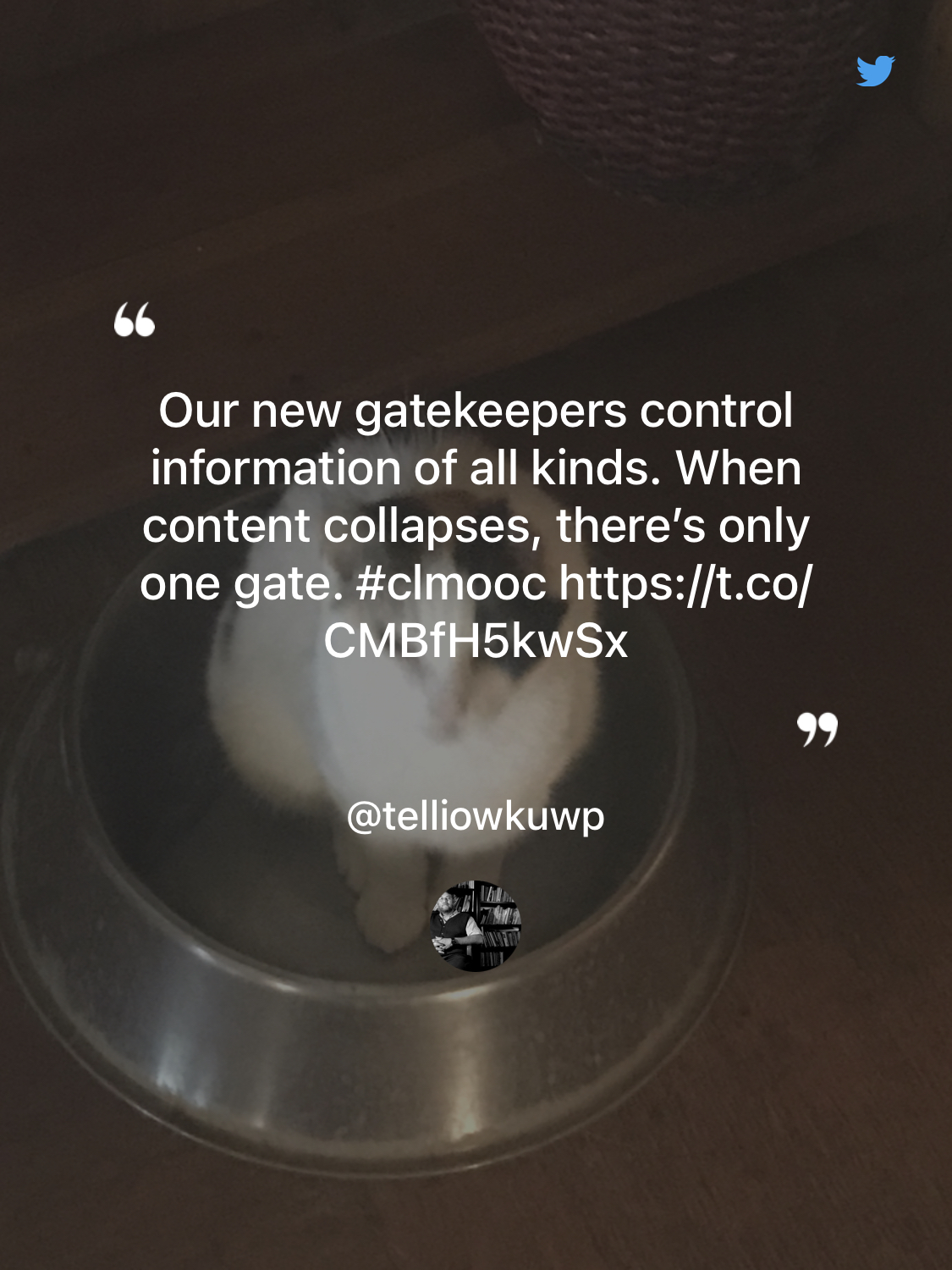
Then I saved that Pablo to Twitter. Once it was on Twitter I had the text I wanted with an accompanying web address that I could plug into Remix. This is where the handoff to Remix occurs. You look up the Pablo tweet in your mobile Twitter feed and send it to Remix. The image below is from Remix. What Remix allows is a higher level of format and background control. That’s why it is so different from the Pablo image. I used my own image from my camera roll.
That’s it. Workflow from start to finish. Here they are side-by-side:
Pablo Image
Remix image
This is, of course, only the preamble to discussion of whether this is a worthwhile tool to adopt for personal, professional or pedagogical purposes. That discussion also entails the content and context of the original article. I am thinking of using this article in my composition class next semester. It is well-organized, clear and timely. The ideas in it are debateable and significant. Do these tools help me read it, comment on it, and share it in ways that move the conversation forward? Does the tool encourage empathy for one’s audience? I think “yes” in both instances. Proof? My own experience with slicing a representative highlight out of an article using Hypothes.is and sending it to Pablo and then tweeting it into a class Twitter hashtag and thence to all of the “translations” to get it onto Remix seem to point to that as proof. I believe that these tools allow us to push back against the content and context collapse that Carr addresses in the article I highlighted.
If you want an even more thorough way to resist content and context collapse I highly recommend participating in a discussion of Carr’s article using Hypothes.is at this link The very best tool I know for fighting against content and context collapse is Nick Sousanis’ incredible dissertation and comix opus magnum, Unflattening. His website, SpinCutWeave, is as fine as frog hair. And did you know that his comix dissertation was the first comic ever published by Harvard University Press. Sweet!