

Outsiders in Academe: Iconoclasty 101

IMG_20140918_063513794

I freely admit that this is a mess of post. Some might view it as wail for attention. Feel free to ignore the whining if you wish. Feel free to wander away and pick your nose. Feel free to check your various personal learning networks, but …wander back please.

I wanted to write a post/article about outsiderism, the idea that the best ideas, the best reform, the best chance for legitimate change comes from outside the discipline or, failing that, from those on the margins within a discipline.

Question: are the facilitators and leaders and participants here outsiders or are they ‘rearrangers’? Are we cozy web makers or are we punks? Fuse lit.

My idea of the consummate outsider is architect, Christopher Alexander. Alexander has long been a gadfly to the architecture community. Since the beginning of his career and throughout the creation of his multi-volume works (starting with A Pattern Language) his emphasis has been upon local, humane, sustainable, and intelligent design. In his latest book he really takes on the role of outsider, pariah even, when he blames those in his own profession for the death march that is modern architecture and design.
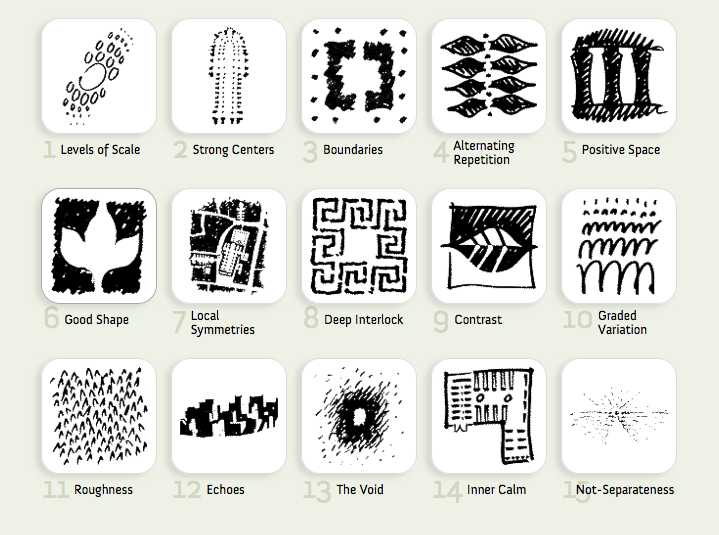
 

Picture-31

I feel the same issues with the materials of modern university life, online and face-to-face. They (the insiders) are killing the good that universities do for learners. Perhaps Jim Groom’s abandonment of edupunk and Alan Levine’s disdain for the word “lurker” are part of a growing outsider movement. Perhaps Howard Rhinegold has always been on the outside looking in. Yet I have to ask: are they (including Mike Wesch, Cathy Davidson, and Randy Bass) enough outside to pull the center to the margin? I really don’t know.

Alexander’s critique is that humans design systems, but they are not currently at the center of the system. In his latest book, The Battle for the Life and Beauty of the Earth, Alexander divides all of architecture into two, prosaic camps: System A and System B. System B is all about efficiency and hierarchy. It is about power and control and productivity. All of which is well and good within its proper context. I want the centralized control systems built into the flying and landing and taking off of airplanes. I don’t want it nearly so much in the ‘ergonomic’ fascism of bathroom design or of learning management systems.

(Aside: anyone who has read Iain McGilchrist’s The Master and His Emissary will note some spooky similarities here.)

System A is all about integrity and health and the folk not as nodes in a machine, but as a growing, adapting, distributed and living whole. It is the difference between a neighborhood and a housing development.

Each of these systems is, in Alexander’s mind, generative. System A is open, sustainable, regenerative, and feels good. System B is oppressive, closed, degenerative, and exhausting. Take your pick. And lest you counter that this is a false dichotomy, you need only look in architecture and higher education for System A generated spaces. There are not that many. Alexander notes that the two systems entail a zero sum game: for one to thrive the other needs to diminish much like predators trying to occupy the same niche in the food chain.

I have a lot of questions about whether any of the web-based tools we are using actually fit the mold of System A. I don’t often feel those spaces as convivial and natural. Behind the artifice of interface lay the reality of code. Is that structure humane? Is it open, sustainable, and regenerative? Does it feel good? Does the whole idea behind code generate System A or System B? I really don’t know.

What I do know is that I get the very distinct feeling that certain systems I use are not convivial. Google+, Facebook, WordPress, Twitter while full of humans, feel closed, feel like templates to be filled in not spaces to be lived in. Hence, the need for outsiders more than ever to raise the question especially in this week of connected courses where we are talking about the why of why.

I am an outsider as many of you are. I came to teaching late after fifteen years of farming and running a couple of businesses (taxes and chimney sweeping). I came to teaching through substitute teaching. WTF. I started teaching at age 39 in a rural setting of intense poverty and dying culture. The culture that was dying was agri-culture. My wife and I unschooled our kids in a time when that was the perceived province of the crank and the zealot. Whatever. I am an iconoclast in a job that values lockstep. I loved the vicious, soul crushing little bastards who I was charged with graduating. Little more was asked of me. I am an outsider who thought that perhaps I could lay a set of parallel sidetracks next to the well-worn ones of System B, an underground railway designed to lift up, carry forward, and sustain those fleeing the plight of System B.

I am still an outsider running an underground railway and I am needing folks to guide me: is this connectedcourses System A or a well-disguised System B. I know how badly that system can abrade, chew up,and spit out its conductors. This paranoia has some pretty deep roots that don’t actually entail black helicopters and the Bilderberg.

So…will the tools we are using and advocating generate System A or System B spaces? Is it even possible to have a System A that arises from our own or other’s codings? How will we know that we have not deluded ourselves, that we are so invested in the time and energy and pride of creation that we fall into the sinkhole of bias and blindspot? I am older than most of you. I don’t have time for this if it’s just another System B in disguise. I have been down that road and it wasn’t of my own making and it doesn’t have a fork in it suitable for a commencement address. (BTW, Robert Frost was not a sweet grandfatherly old gent in that poem. Not very really.)
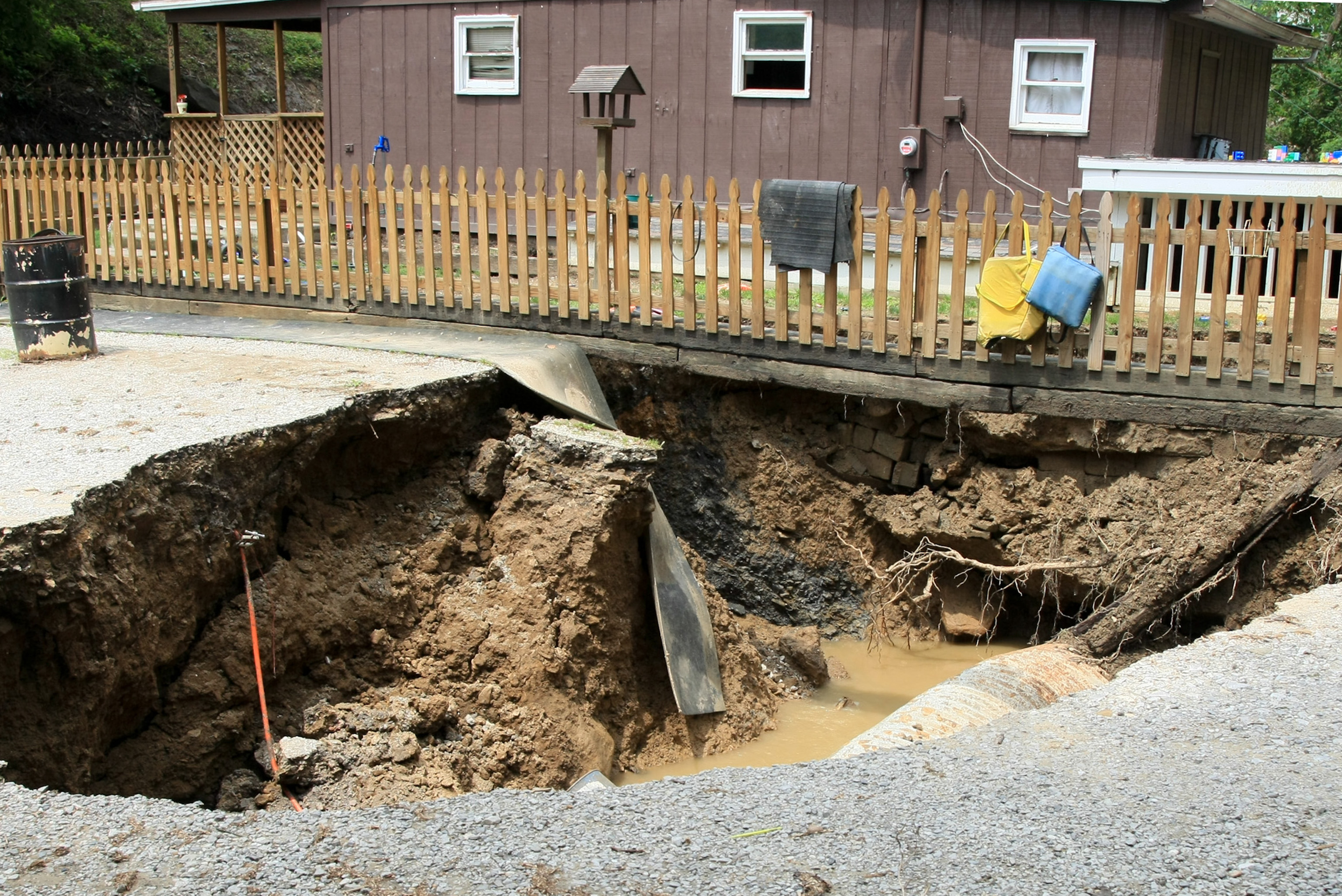
Recent Floods in Perry County KY

Alexander’s story in his latest book is one the extends from 80’s to the present day. He continues to fight against the architectural forces that value the modular over the adaptive, the global over the local. His project, the Eishin School, continues to be under fire by the powers-that-be in Japan. He continues to fight back. He is still the consummate outside. He believes in design from the folk up. I will use that yardstick to measure everything I will be trying from this course and in my courses. Is everything I do designed from the folk up? Is everything you do designed from the folk up? Is it humane and regenerative and sustaining, and alive? Or does it just serve the status quo ante bellum?

Thanks for letting me take this feldgang. A feldgang is what farmers do all the time. Fieldwalks. On my farm I see the hope of a rainy August. I see all kinds of forbs for my sheep to eat. Deep rooted docks and Queen Anne’s lace, plaintain weed and hop clover and red clover and white clover. Fescue and chicory. It is a meadow fit for a ruminant. Usually it is pith dry. Sometimes the fallen and broken branches get trampled further by our sheep and as they walk through they sound like marimbas being janked around by a hyperactive eight year old. Yes, this August is rare. I hope that #ccourses is a rainy August. Many feldgangs await. I have been accused of being hyperbolic and of wildly inflating conditions on the ground. I really do call them like I see them. I just need help seeing what I observe. Help me see.

IMG_20140918_063543956

Observations from a Connecting Course: Early Days and More Cowbell

One thing I noticed on the first days is this. Most of the stuff I did had me as the hub in the network and almost nothing had the students as distributed nodes. I am thinking more in terms of becoming by semester’s end the Anti-Hub City and more Distributed Node City.

IMG_20140903_154159584

I am trying to reveal the invisible (or unaware) chords of the spider’s net of presence and connection in the classroom. Today I used the thank you note, the idea of networking,  and Twitter and  G+ communities.

IMG_20140903_154159584-150x150

The future of the connected classroom is already here; it is just not awarely distributed.

IMG_20140903_154159584-150x150

Is the continuum of the adjacent possible of connection in the classroom potential enough to allow what the affordance of the distributed network? Hah, take that Deleuze and Guattari. Translated: is the structure of the Uni classroom (f2f, hybrid, online) stretchable enough to do the connected learning dance? I suppose one might argue that ds106 is singular proof of that, especially the headless ds106.

IMG_20140903_154159584-150x150

Initial condition–awareness of connectedness and pushing connected learning principles and values as the ground of classroom being, tech provided: G+, twitter, name games, f2f groups, thank you letters, awareness building about connections, six degrees of separation. Emergent behaviours– keep looking.

IMG_20140903_154159584-150x150

Feedforward–what would I expect that emergent behavior to look like? Helping each other with google 20% project, participating in unexpected ways on the networks provided, and, in general,  expecting to be surprised, collaborate on projects, on presentations, on required stuff. Break the rules. Maybe cross over into other subjects and work with others at arms length.

IMG_20140903_154159584-150x150

In a way, the connected classroom is hypothetical, i.e. a total crapshoot. If I apply connected learning principles, then I will get…what? Connected learners, more humane people, better projects. What exactly do I want other than to be surprised–in a happy way. Epiphanic as all “get out” is my dream emergence.

IMG_20140903_154159584


The story of the projector or the tale of hidden connections. Projector. Symbol of the infrastructure of the University classroom. Enables and affords. Bad projector, have to turn off lights, cue Sandman. Good projector. No lights out. Better shared experience. My projector was weak and crippled. It was not properly enlightened. I had students thank the folks who fixed it. I had asked the infrastructure powers that be to fix it, didn’t expect it to be fixed. They did. Thanks all around. Gratitude abounds. Or does it. I am sort of obsessed with laying bare the connectedness of the “already there”. Infrastructure is part of that connectedness. Invisible. It and those who support it are part of the grand, human web of connection for good or ill. Mostly good locally not so sure globally.  Doubtless doing more with the invisible connections.

Point? We are already connected. We are already practicing connected learning. I asked for help. You might imagine that you are throwing that request out into the universe like winging a dying sparkler in the night. You are really casting into a net. Sometimes it is so small it slips through, usually not. This is why I loved hearing about the twenty minute rule in the pre-course Hangout Tuesday: if you can’t figure it out in 20 minutes, get connectin’. I am trying to get my learners to do same. Long story short. I had my students sign a group thank you note. Corny, but as my mother-in-law said, ‘bread and butter’. All the better to spread the wealth, I took that gratitude to those who deserved it. 54 signatures, evidence that someone done good for you. And so those bundles of habit (as William James called them) are begun. I hope these initial conditions in the connected classroom will lead to a climate of constant happy surprise and growing entanglement, preferably visible and not quantum.

Planning to do? Keep revealing connections. Keep playing connecting games in the classroom. Keep advocating for play and choice and equity and all the overt and discovered principles and values of connected learning. Keep showing ways to connect both locally and globally. Keep observing what is going on. Oh, yes, and more cowbell.


Isaidmorecowbell

Call and Response|Post and Comment: Connecting with Susan Watson

IMG_20140829_090557288-EFFECTS

I know for certain that I would not have thought these thoughts without Susan’s promptings. You can give her the credit for any good that results and me the blame for the any of the nonsense. Fair enough here is my response to her comments to this blog post. Perhaps you could read that first? Or not.

Susan: Terry, damn you, you always fire my neurons to the point that I have too many things to try to communicate. This is a good thing. But you know that.

Terry: Always hoping for a good signal to noise ratio. Often failing and forcing my reader to generate the signal through the noise as best they can.

S: First question is why you used the word ‘narcissism’? I didn’t feel narcissism in this piece!

T: Writing is inherently narcissistic (seems like too many s’s there). Reflection is part of the original Echo and Narcissus story. Reflection cuts both ways. Sometimes you get that endless rabbit hole recursion and you don’t even realize it. So the narcissism reference is a big fat “Caveat Emptor” that is the proper assumption for every type of writing, but especially blog posts.

S: Second, thank you for sharing your immediate failures and reflections. 🙂 Failure and reflection are (at least to me) the keys to substantive progress. Now, trying to explain that to a.) freshman and b.) old-school in-a-rut teachers are, to me, parallel problems. There are teachers at my school who do no reflection and have no interest in risk-taking. One teacher’s PDP goal last year (at least in its first iteration) was (and I kid you not) – “Chapter Two.”

T: Yes, I love the realpolitik in this. I know that you know that we know that the world is way more complex than either of us can effectively map out so we use narrative and metaphor and image and song to do the best we can. And making. Always with the making. Deeply empathetic with your milieu. All I can say is that there are different connecting strokes for different folks and that sometimes the key is not obvious and often counterfactual and even accidental. Keep watching. Maybe it all boils down to shared Precious Moments (you know, the ones I mean)

precioiusmoments

Susan: Which brings me to the liquid syllabus – how do you conceptualize this to students? Because I need to conceptualize it to teachers and this is the first and biggest roadblock for some. What if you are trying to connect with people who aren’t curious, motivated learners? What if they just want to sign off on a sheet that they “completed the professional development module”? These aren’t people who will explore a viral concept in a syllabus. We have begun to evolve our staff into a learning community, but still have some who literally don’t care if they learn anything new.

Terry: I suppose you need to think of those liquid robots in The Terminator movies. Endlessly Protean. That’s what we have to be as teachers. And that is a dodge of your question so now I need to re-focus.

Part of me wants to lay the task onto someone else. For example the idea of a shadow syllabus that Tanya Huber lays out here. Living her syllabus is something you can do on your side of that unbalanced equation we call the classroom and what she calls “that strange box with chairs in it.”

Part of me wants to ‘operationalize’ the truths in this marvelous RSA Animate video by Manuel Lima. Instead you can join the discussion down this Vialogue prairie dog den.

The liquid syllabus is making the network come to life in any way possible. I want to conceptualize it as a wiki that is barebones. Yes, I have assignments in my liquid syllabus, but I also have a wide range of agency inside that assignment. If that isn’t liquid enough, then I have a Google 20% project that is a wide open channel. I suppose the point is that for a liquid to do its work it has to be contained somehow. In the end the more you can get the learner to make their own cup and fill it with the artesian well of their own soul, the more apt the syllabus becomes. I know that sucks as a conceptualization, but that is about as far as I am right now. Field reports to follow.

S: I love the fact that you are trying the google 20% idea. I actually think this would work better with my kids than my teachers. I think modeling your own 20% and meditative practice is genius. I guess I am trying to create Connected Learning in two modes – one for staff PD and one for students. Too many things in my head right now, and not enough people ready to jump in. And as you said, I will also be the “putative benevolent center of the learning hub” by default. I’m the one excited by it, needing to figure out how to light that volcanic flame in others. I keep thinking that in its initial phases of implementation, it really will be about engagement and taking a very strong leadership role in order to create buy-in, which hopefully can eventually become more distributed as the fire [hopefully] spreads. I just feel such a huge responsibility to make that happen. (So it seems my comment is far more self-centered than your post.)

T: I suppose the point is to start somewhere. That is the philosophy I have adopted from the Japanese industrial model–kaizen. In kaizen, there are three types of improvement: innovation (new ideas/processes/projects/organization), change (new elements in existing ideas/process/projects/organization), and imitation (already existing blahdiblahdiblah). Perhaps as you try to implement change with your teachers you need to provide a very simple process to execute. Then you will want to have that process be integrated into existing processes. Finally, you will want that to lead to personal and perhaps idiosyncratic innnovation. Most kaizen practitioners don’t include innovation as part of kaizen. They leave that to the technocrats, but I think that teachers need to be technocrats, aka edupunks.

Practically speaking, this might mean playing the Name Game straight from the book. Then it might mean adapting it for other purposes. Finally, it might become a memory system for learners or…who knows. Idiosyncrasy, iconoclasm, quirkiness? Whatever you want to call it, that final stage sometimes involves a profound cussedness. It must be who you are, whatever that is, and only you know who you are. Teaching is more than semi-tough, isn’t it? It is volcanic flame, putative benevolence, perhaps even intentional confusion and a bit of aikido thrown in for good measure.

S: Your Name Game is such a simple but powerful reminder that we are connecting to REAL PEOPLE. You have driven that home to me with your human compassion and willingness to connect on a human and friendship level.

T: Reciprocation and recursion backatcha. I think you speak the deepest truth here. To succeed we only need access the best humanity we are at any given moment. As if….that adverb ‘only’ is damned slippery. We are imperfectly moving toward that best humanity, two steps forward, half a step back, fall down, get back up, and so on and so forth oobiedoobiedoo. That’s why I call this weblog “Impedagogy”. Sometimes it means impolite pedagogy, sometimes imperfect, sometimes impertinent or impolitic or imperceptible or even impossible. Situational imp, that’s me. Progress ain’t always progressive.

IMG_20140830_091440201
Richard Taylor from Five Kentucky Poets Laureate : An Anthology by Jane Gentry and Frederick Smock (2008, Hardcover)

Susan: I have added no edification to your post but I share your willingness to fail loudly.

Terry: With all due respect (and respect is due), I disagree. I stand edified, inspired and in awe of your capacity to connect. Over distance and circumstance and written language there is every opportunity to muck up, but you have not. You have made me make a greater effort. Hell, I would not have written what I have here without your prompting. Plus, that model is one that I can carry with me and that will carry me to do better as a connector and encourager and questioner. That is a gift both rare and useful. Our new t-shirt motto: Fail Loudly and Carry a Big Stick.

And now for something completely different, yet apt I think.

I Hate the Ten Best Apps Ever

I hate app posts
That ten best apps like best friends

when I see
when I look on thee
your thousand apps
to help me…
do what?
To channel my soul
through dry sand…
for whom?
To
why?
Take your myriad app.
They make me mad.
Instead give me queries
And real anger
and connection.
More apt.
Less app.

Thanks, Susan.